Saturday, March 3, 2018

Unable to start the geometry editor ANSYS WB on CENTOS

export LD_LIBRARY_PATH=/usr/ansys_inc/v172/Framework/bin/Linux64/Mesa


sudo nano ~/.bashrc
export LD_LIBRARY_PATH=/usr/ansys_inc/v180/Framework/bin/Linux64/Mesa

Monday, January 22, 2018

Virtualbox shared folder permissions


Solution 1
Edit the file /etc/group. Look for the line vboxsf:x:999 and add at the end :yourusername
Solution 2
Run sudo adduser yourusername vboxsf

Sunday, December 10, 2017

Fluent 17.2 C++compiler


For the case if you have troubles with C++ compiler and tools installation and some bugs, the following workaround will help you.

1) Download and install Microsoft Visual studio, say 2015.
2) Browse to C:\Program Files\ANSYS Inc\v172\fluent\ntbin\win64 and backup udf.bat to udf.bat.ORIG
3) Place the following code to udf.bat

@echo off
rem ---
rem MS Visual C++
rem ---
set MSVC=
set MSVC_VERSION=0

set MSVC_VERSION=172
call "c:\Program Files (x86)\Microsoft Visual Studio\2017\Community\VC\Auxiliary\Build\vcvarsall.bat" x86_amd64

echo Detected MSVC%MSVC_VERSION% under ""
echo path=%path%
echo include=%include%
echo lib=%lib%


4) Make sue that in Fluent launcher on the Environment Tab the the Set up Compilation Environment for UDF checkbox is picked up.

Enjoy...

Also useful information can be found here -   COMPILING AND LOADING USER DEFINED FUNCTIONS USING FLUENT 14.5 OR 15.0


Wednesday, November 1, 2017

mpurun error 19 more processes have sent help message help-mpi-btl-base.txt / btl:no-nics Set MCA parameter "orte_base_help_aggregate" to 0 to see all help / error messages

If you get mpurun error as 

N more processes have sent help message help-mpi-btl-base.txt / btl:no-nics
Set MCA parameter "orte_base_help_aggregate" to 0 to see all help / error messages

the workaround is to add to the command

--mca btl ^openib

to disable the openib btl

Monday, June 26, 2017

Remove Docker Images & Containers


docker stop $(docker ps -a -q)
docker ps -a
docker rm  <CONTAINER ID>
docker images
docker rmi  <IMAGE ID>

Saturday, May 13, 2017

Adobe Acrobat in Ubuntu 16.04

sudo add-apt-repository "deb http://archive.canonical.com/ precise partner"
sudo apt-get update
sudo apt install adobereader-enu
sudo add-apt-repository -r "deb http://archive.canonical.com/ precise partner"

Tuesday, December 13, 2016

FFT with window normalization: python implementation


We consider the harmonic function of a field as follows:

           x = amp* sin(2*pi*f*t)

Here, amp is the amplitude of the field, i.e, displacement or pressure, f is the frequency of the harmonic signal and the t is the time (parameter).

If we want to deal with RMS of the sinusoid signal than ampl/sqrt(2) should be used. Before performing Discrete Fourier Transform it is good practice to window signal in order to decreases leakage, etc.

Transforming the harmonic signal into frequency domain, two-sided spectrum is obtained. Normalization should be done done by dividing values of magnitude by energy of the window. If we to take signal "as it is" (which is equal to applying rectangular window) the spectrum is then divided by number of samples N. For different types of windows this factor that is equal to sum of all window samples.

Additionally we are only interested in one half of a spectrum, therefore amplitude of all samples must be multiplied by two to compensate the loss of energy, except of DC component which appears only once.

So the python code is as follows.


import numpy as np
import matplotlib.pyplot as plt
from scipy import signal as mySignal
from scipy.signal import argrelextrema

plt.close('all')

f1 = 1
f2 = 2
f3 = 3
T1 = 1/f1
T2 = 1/f2
T3 = 1/f3

fs = f1*20
duration = 1/f3*8
npts = int(fs*duration)
t = np.arange(npts, dtype=float)/fs

amp1    = 1
amp2    = 2
amp3    = 3

signal  = amp1 * np.sin((f1*duration) * np.linspace(0, 2*np.pi, npts))  + amp2 * np.sin((f2*duration) * np.linspace(0, 2*np.pi, npts))  + amp3 * np.sin((f3*duration) * np.linspace(0, 2*np.pi, npts))
signal3 =amp3 * np.sin((f3*duration) * np.linspace(0, 2*np.pi, npts))

plt.figure(1)
plt.subplot(2,1,1)
plt.plot(t, signal)


# Window signal
win_hamming = np.hamming(npts)
win_boxcar  = mySignal.boxcar(npts)
win = win_boxcar
#win = win_hamming

signal = signal * win
plt.plot(t, signal)
plt.plot(t, signal3,linewidth=10)
plt.title("Boxcar window")
plt.ylabel("Amplitude")
plt.xlabel("Time,s")

sp = np.fft.fft(signal)
freq = np.fft.fftfreq(npts, 1.0/fs)

# Scale the magnitude of FFT by window energy and factor of 2,
# because we are using half of FFT.
sp_mag = np.abs(sp) * 2 / np.sum(win)

# To obtain RMS values, divide by sqrt(2)
sp_rms = sp_mag  / np.sqrt(2)

# Shift both vectors to have DC at center
freq   = np.fft.fftshift(freq)
sp_rms = np.fft.fftshift(sp_rms)

x = sp_rms*np.sqrt(2.0)
m = argrelextrema(x, np.greater)   #array of indexes of the locals maxima

freq_local   = [freq[m] for i in m]
sp_rms_local = [sp_rms[m]*np.sqrt(2.0) for i in m]

print(freq_local)
print(sp_rms_local)

plt.subplot(2,1,2)
plt.plot(freq, sp_rms*np.sqrt(2.0))
plt.plot(freq_local, sp_rms_local, 'rs')
plt.xlim( (0, f1*2)  )
plt.grid('on')

plt.show()


Monday, November 21, 2016

Symmetry in Mathematics and in Physics


The proposition is that the symmetries of physics are a subset of the symmetries of mathematics.

Typically, a physical law satisfies a particular symmetry if it holds despite a change in some parameter of the set of phenomena covered by the law.
  1.  An obvious symmetry is invariance with respect to space which dictates that if the location at which an experiment is performed is changed the results of the experiment will nonetheless be the same. 
  2. Another symmetry, invariance with respect to time, mandates that the results of an experiment will stay the same even if the time that an experiment is performed changes. 
Physicists have generalized the term “symmetry” from descriptions of objects to descriptions of laws of nature. A law of nature exhibits symmetry when we can transform the phenomena under the scope of the law in certain ways and still make use of the same law to get a correct result. We say that such a law is “invariant” with respect to those transformations.

In 1918 symmetry became even more relevant to (the philosophy of) physics when Emmy Noether proved a celebrated theorem that connected symmetry to the conservation laws that permeate physics. The theorem states that for every continuous symmetry of the laws of physics, there must exist a related conservation law. Furthermore, for every conservation law, there must exist a related continuous symmetry.

  1. For example, the fact that the laws of physics are invariant with respect to space corresponds to conservation of linear momentum.The law says that within a closed system the total linear momentum will not change and the law is “mandated” by the symmetry of space. 
  2. Time invariance corresponds to conservation of energy. 
  3. Orientation invariance corresponds to conservation of angular momentum

Noether’s theorem had a profound effect on the workings of physics. Whereas physics formerly first looked for conservation laws, it now looked for different types of symmetries and derived the conservation laws from them. Increasingly, symmetries became the defining factor in physics.


Physics also respects another symmetry, which as far as we know has not been articulated as such. The symmetry we refer to is similar to the symmetry of time and place that was obvious for millennia but not articulated until the last century. Namely, a law of physics is applicable to a class of physical objects such that one can exchange one physical object of the appropriate type for another of that type with the law remaining the same. Consider classical mechanics. The laws for classical mechanics work for all medium sized objects not moving close to the speed of light. In other words, if a law works for an apple, the law will also work for a moon. Quantities like size and distance must be accounted for, but when a law is stated in its correct form, all the different possibilities for the physical entities are clear, and the law works for all of them. We shall call this invariance for a law of nature, symmetry of applicability, i.e. a law is invariant with respect to exchanging the objects to which the law is applied.


To sum up our main point, philosophically the change in the role of symmetry has been revolutionary. Physicists have realized that symmetry is the defining property of laws of physics. In the past, the “motto” was that a law of physics respects symmetries. In contrast, the view since Einstein is: that which respects symmetries is a law of physics. In other words, when looking at the physical phenomena, the physicists picks out those those that satisfy certain symmetries and declares those classes of phenomena to be operating under a law of physics. Stenger summarizes this view as follows:
             “. . . the laws of physics are simply restrictions on the ways physicists may draw the models they use to represent the behavior of matter”. !!!

They are restricted because they must respect symmetries. From this perspective, a physicist observing phenomena is not passively taking in the laws of physics. Rather the observer plays an active role. She looks at all phenomena and picks out those that satisfy the requisite symmetries.

Our main point is that this uniform transformation and the fact that statements remain true under such a transformation is a type of symmetry. Recall, a symmetry allows us to change or transform an object or “law” and still keep some vital property invariant.

As with physics, in the past whereas we used to understand that:
           "A mathematical statement satisfies symmetry of semantics".
We now claim that:
           "A statement that satisfies symmetry of semantics is a mathematical statement."
In other words, given the many expressible statements a mathematician finds, her job is to choose and organize those that satisfy symmetry of semantics.


Tuesday, November 8, 2016

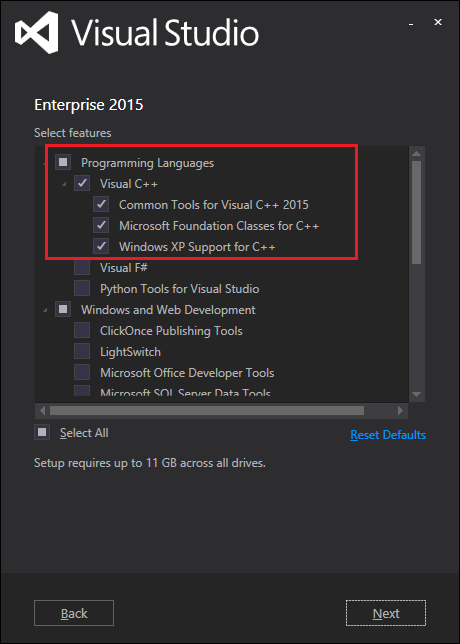
Fluent compilation error: 'cl' is not recognized as an internal or external command

In the case you get the error

'cl' is not recognized as an internal or external command,
operable program or batch file.
NMAKE :  U1077: 'cl' : return code '0x1'
Stop.

Install the C++ tools since they are not being installed by default in Visual Studio 2015. Run the setup again, and install the C++ 


How to Encrypt and Decrypt Files With GPG on Linux

https://www.howtogeek.com/427982/how-to-encrypt-and-decrypt-files-with-gpg-on-linux/